




Why Your Gate Matters More Than You Think
Most homeowners spend a lot of time choosing their fence. They compare materials, weigh privacy options, think about curb appeal, and get multiple quotes. Then they pick a gate almost as an afterthought.
Down Home Fence has seen this pattern play out for 8 years, and the team will tell you plainly: the gate is the one part of your fence you interact with every single day. It deserves more than an afterthought.
Your gate is the first thing you touch when you pull into the driveway, and the last thing that closes behind you when you leave. It's what stands between your yard and the street when your kids are outside. It's what a stranger encounters before they can reach your front door.
A gate that works well is one you barely notice. A gate that doesn't will make itself known every single time you use it. This blog breaks down what makes a gate genuinely worth investing in, and what Middleborough MA fencing customers should know before making that decision.
The Part That Wears Out Faster Than the Rest of the Fence
A fence panel sits still. A gate moves hundreds of times a year, carrying its own weight on a pair of hinges and a latch that has to catch reliably every single time. The physics alone make it the most mechanically demanding part of the entire system.
This is why gates fail before fences do. The most common complaints from homeowners include:
- Gates that sag and drag along the ground after a year or two
- Latches that stop catching reliably in cold weather
- Gates that swing open on their own due to grade issues
- Posts that have shifted enough to throw the whole gate out of alignment
None of these problems is inevitable. They're the result of installation decisions that seemed fine at the time but didn't account for long-term use.
The takeaway for homeowners is straightforward: a gate is a mechanical system, not just a door in a fence, and it should be treated like one from the start.
Matching the Gate to How You Actually Live
The right gate depends entirely on how the property gets used, and that varies more than most people expect. A few specific questions are worth working through before settling on a style.
How wide does the opening need to be?
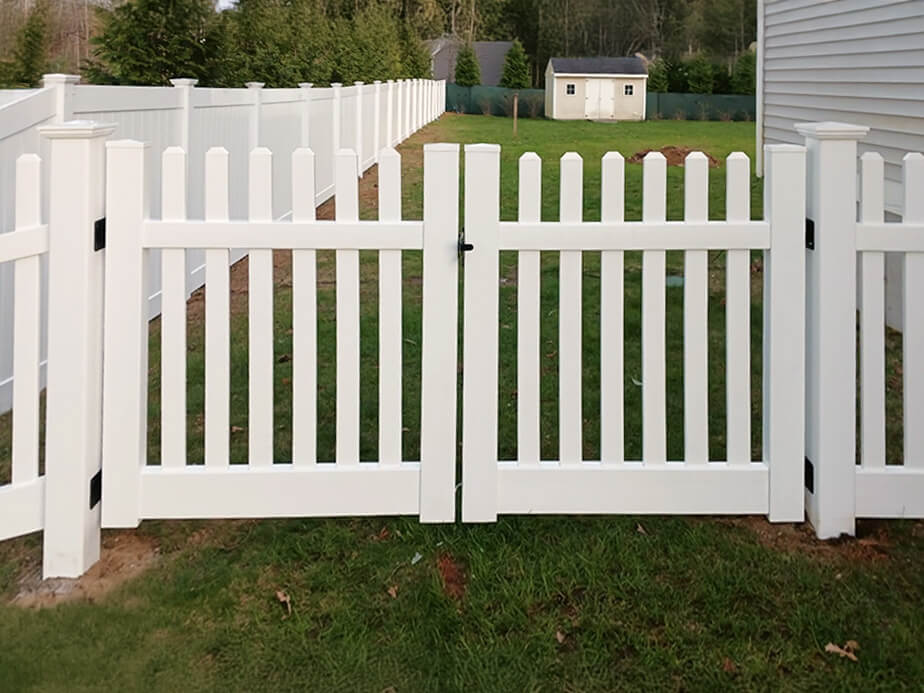
A pedestrian gate through a side yard can be as narrow as three feet. A driveway gate that needs to allow vehicle access should be at least 10 feet wide, and double-swing or sliding configurations are typically required at that width.
Getting this measurement wrong means either a gate that doesn't clear the vehicle or one with so much flex in the span that it sags within a year.
Which direction should it swing?
A gate that swings inward works fine in most residential settings, but on a sloped driveway, it can be a problem if the grade causes it to swing open or closed on its own.
Outward-swinging gates solve that issue, but require clear space on the exterior side. Sliding gates sidestep the swing question entirely, which is why they're a strong option on properties where space is tight on both sides of the opening.
Who is using it, and how often?
Households with young children or dogs benefit from a self-latching mechanism that closes and secures automatically. Homeowners focused on driveway security may want a padlock-compatible latch or an automated gate opener with keypad access.
Properties with frequent utility or delivery access need a gate wide enough to accommodate those vehicles without a daily workaround, and households with multiple users benefit from hardware that operates intuitively and consistently across all weather conditions
Residential Gates, Estate Gates, and Automation: Knowing Which Category Fits
Not all gate projects are the same, and the project's scale should shape the approach from the start.
- Residential gates are excellent for side yard access, backyard enclosures, and standard driveway entries. The focus on durable hardware, proper sizing, and a style that complements the existing fence.
- Estate gates are larger, more aesthetically striking entry points that make a statement about the property before anyone sets foot on it. Material quality, post depth, and structural reinforcement all matter more at this scale because the gate is carrying more weight and absorbing more stress.
- Gate automation adds a layer of convenience and security that a growing number of homeowners are choosing to build in from the start. Automatic openers can be paired with keypads, remotes, or intercom systems, and the proper setup depends on how the gate is being used day to day. Automation built into the original installation is always more cost-effective than retrofitting it onto a gate that wasn't designed for it.
What Each Material Brings to the Table
Material choice affects appearance, maintenance requirements, and long-term durability. New England winters are cold, humidity is persistent, and coastal conditions affect properties near the Taunton River and other bodies of water, so these factors carry real weight when choosing what your gate is made of.
| Material | Best For | Maintenance Level |
|---|---|---|
| Wood (Cedar / Pressure-Treated Pine) | Natural look, custom sizing | Moderate (sealing or staining every 2-3 years) |
| Vinyl | Modern residential use | Very low |
| Cellular Vinyl | Enhanced durability with the look of standard vinyl | Very low |
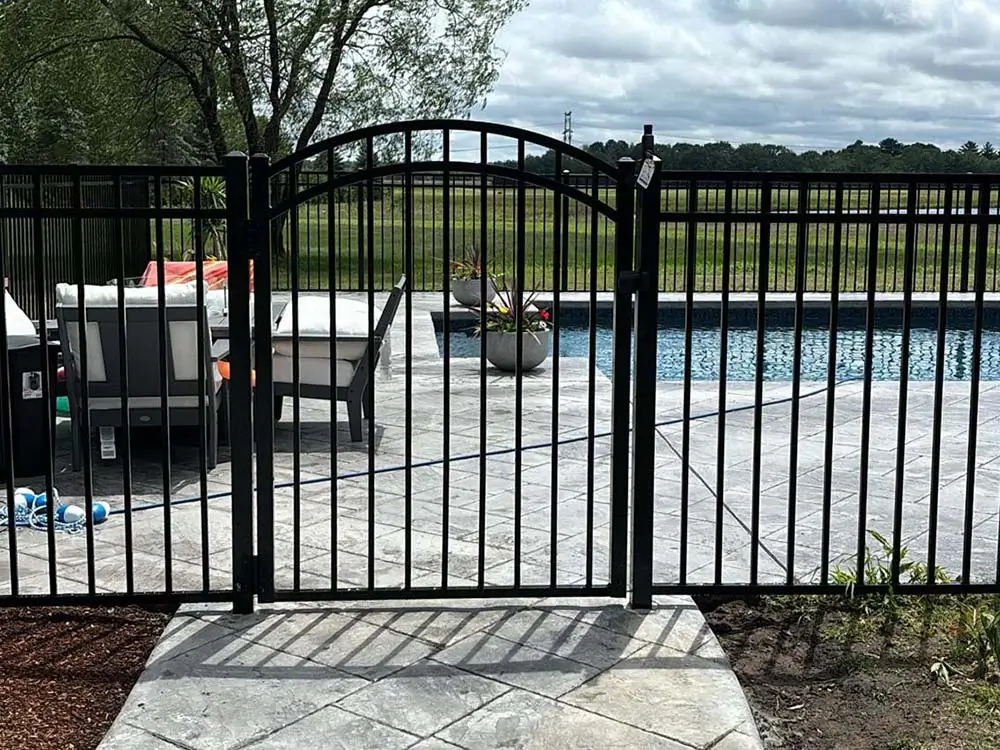
| Aluminum | Decorative gates, humid environments | Low |
| Ornamental Steel | Front entries, formal and high-security applications | Low to moderate |
| Chain Link | Utility access, dog runs, backyard enclosures | Very low |
Each of these materials holds up well when properly installed, but the right choice depends on where the gate is located, what it's being used for, and the level of upkeep the homeowner is willing to take on.
Hardware Is Where Cheap Installations Show Their Weaknesses
Walk up to a gate that's been poorly installed for a few years, and the hardware tells the whole story. The problems that develop are predictable and almost always trace back to the same shortcuts:
- Hinges sized for the gate category rather than the gate's actual weight
- Latch hardware that wasn't rated for outdoor temperature swings
- Screws that weren't sealed against moisture and worked their way loose over time
- Post hardware installed without accounting for seasonal expansion and contraction
Quality hardware isn't always glamorous, but it's the difference between a gate that works reliably for 10 years and one that needs attention every season. Heavy-duty, weather-resistant hinges should be matched to the gate's actual weight. Latches should operate just as smoothly in February as they do in July.
Homeowners considering an automatic opener need to have the hardware conversation early. Post placement, gate weight, and clearance all affect which systems are compatible, and building those variables into the original installation is far simpler than retrofitting after the fact.
What the Local Climate Does to Gates Over Time
Massachusetts residential fences face weather conditions that test materials and installation quality year after year. Homeowners who know what to expect can ask better questions and make more intelligent choices upfront.
- Frost heave shifts posts through winter freeze-thaw cycles. Posts that aren't set below the frost line will move with the ground, and even small shifts can throw a gate completely out of alignment. Concrete footings need to be sized for the specific soil conditions on the property, which vary across Middleborough MA and the surrounding towns.
- Humidity and salt air accelerate corrosion on hardware that wasn't properly rated for coastal conditions. This matters more for properties closer to the water, but it's a factor worth considering anywhere in the region.
- Drainage around post bases is easy to overlook and costly to ignore. Water that pools at the base of a wood post accelerates rot from the bottom up. Great installation accounts for drainage from the start rather than leaving it to chance.
Down Home Fence Knows This Area and This Work
Down Home Fence is a firefighter-owned company and a trusted Middleborough MA fencing contractor with over 8 years of experience helping homeowners get their fencing right.
That background matters because the same values that define public service carry directly into every fence and gate installation the team completes: reliability, accountability, and doing the job right the first time.
We are ready to help whether your current gate is giving you trouble or you're starting fresh and want to get it right from the beginning. Contact us online or call us at (508) 948-3333 to talk through what you need for your project. A gate that works the way it should is one you stop thinking about entirely, and that's precisely what we build.